
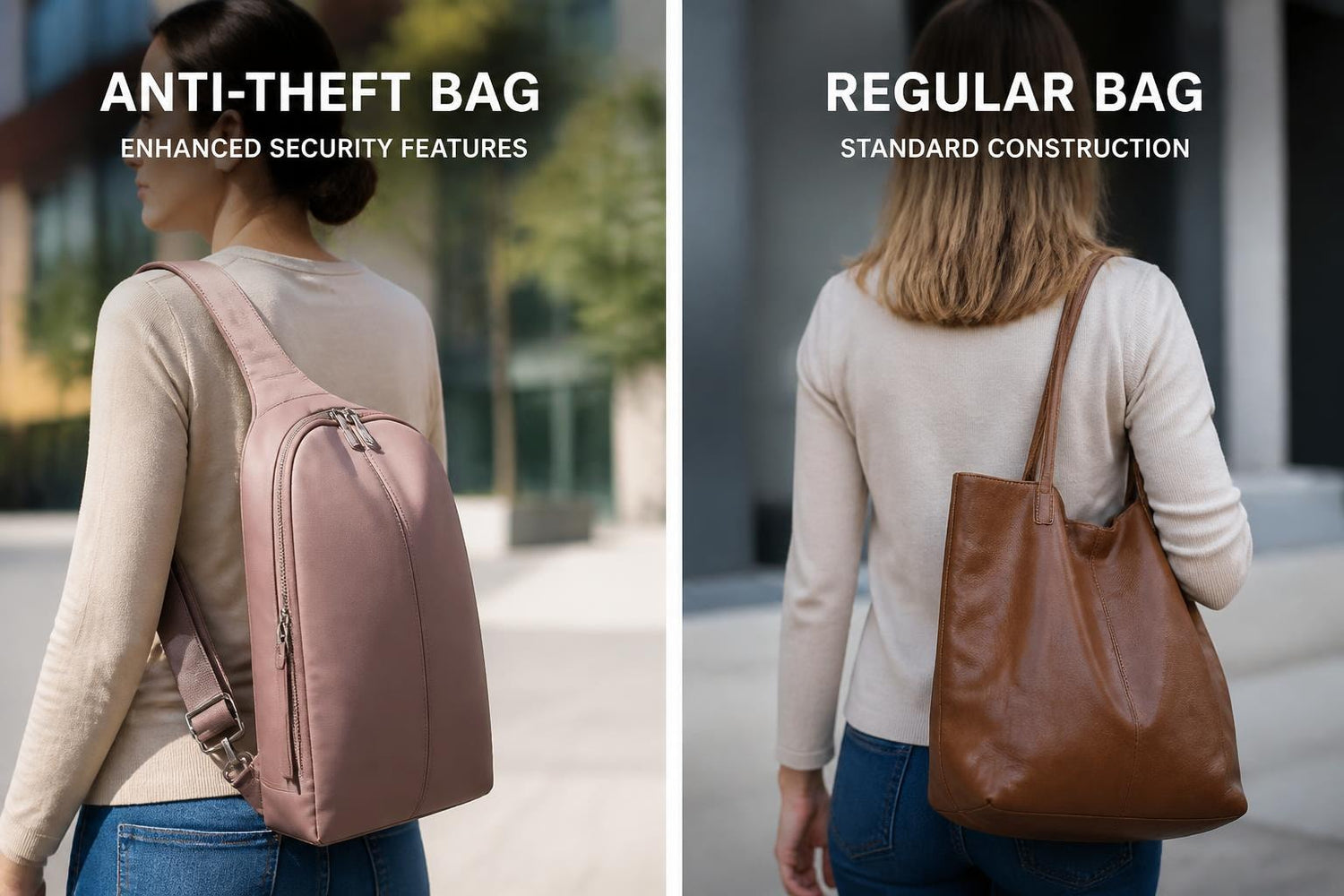
When you're choosing a bag for everyday use, travel, or commuting, you'll quickly notice two distinct categories: anti-theft bags and regular bags. The decision between an anti-theft bag vs regular bag isn't just about style. It's about understanding which features genuinely make your life easier and your belongings safer. This comparison will help you make an informed choice based on your actual needs, not marketing hype.
What Makes an Anti-Theft Bag Different?
An anti-theft bag includes specific security features designed to deter opportunistic thieves. These aren't magic solutions, but they do create meaningful barriers that regular bags simply don't offer.
Key security features include:
Lockable zippers that prevent easy access
Hidden compartments positioned against your body
Slash-resistant materials embedded in the fabric
RFID-blocking pockets to protect cards and passports
Cut-resistant shoulder straps
Crossbody designs that keep the bag in your line of sight
Regular bags prioritise aesthetics, capacity, and basic functionality. They're built for convenience, not security. Most use standard fabrics, exposed zippers, and traditional strap designs. While perfectly adequate for low-risk environments, they offer minimal protection against theft.
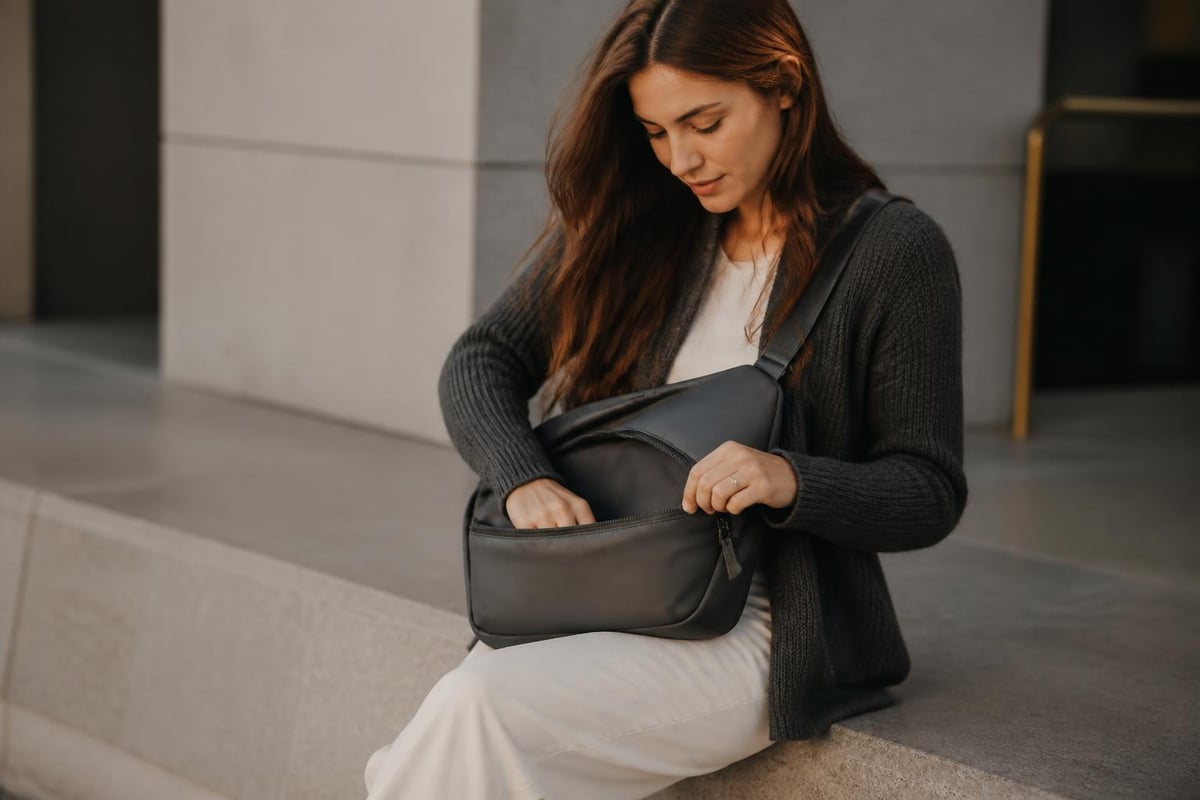
Security Features: A Practical Comparison
Feature |
Anti-Theft Bag |
Regular Bag |
|---|---|---|
Zipper Access |
Lockable, hidden, or positioned against body |
Standard, easily accessible from outside |
Material Strength |
Slash-resistant fabric panels |
Standard cotton, polyester, or canvas |
RFID Protection |
Built-in blocking technology |
No protection |
Strap Design |
Cut-resistant, often with steel cable |
Standard fabric straps |
Compartment Layout |
Hidden pockets, strategic placement |
Open, easily visible organisation |
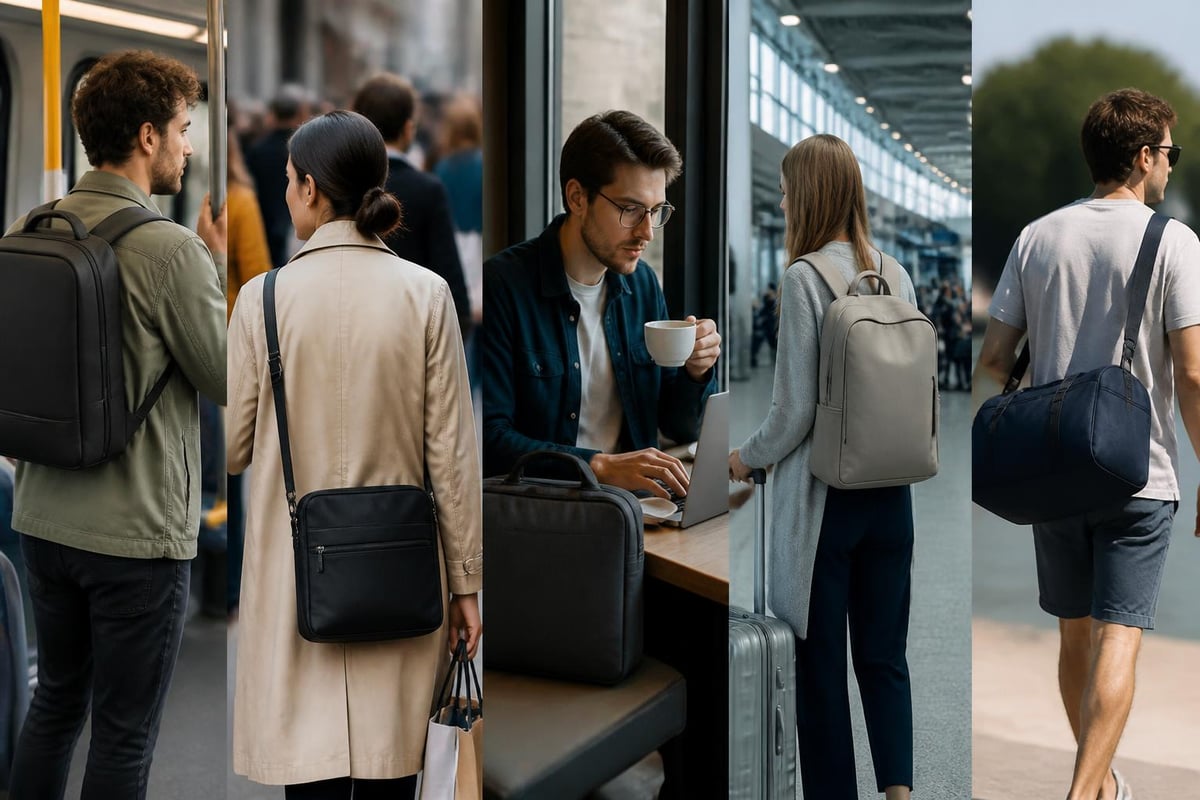
The anti-theft bag vs regular bag comparison becomes clearest when considering where you'll use it. Public transport, crowded markets, airports, and tourist areas present higher risks. An anti-theft bag won't guarantee complete protection, but it significantly reduces your vulnerability.
Real-World Effectiveness
Anti-theft bags do provide measurable security benefits, though they're not foolproof. The most effective feature is often the psychological deterrent. Thieves target easy opportunities. When your bag requires extra effort, they typically move on.
Situations where anti-theft bags excel:
Navigating busy train stations during peak hours
Shopping in crowded markets or festivals
Travelling through airports and tourist hotspots
Walking through unfamiliar neighbourhoods
Attending outdoor events with large crowds
Regular bags work perfectly well in controlled environments like your workplace, car, or home. The question isn't whether anti-theft bags are universally superior; it's whether the security features align with your lifestyle.
Comfort and Everyday Convenience
Many people assume anti-theft bags sacrifice comfort for security. Modern designs have largely eliminated this trade-off.
Anti-theft bags now offer:
Padded straps that distribute weight evenly
Ergonomic back panels with airflow channels
Multiple carrying options (crossbody, shoulder, backpack)
Organised compartments with quick-access pockets
Lightweight construction despite protective materials
Regular bags often prioritise fashion over function. They might look appealing but lack proper weight distribution, padded support, or practical organisation. However, they're typically lighter and less structured, which some people prefer for casual use.
The anti-theft bag vs regular bag debate around comfort depends on how you carry weight. If you regularly transport laptops, tablets, or heavy items, anti-theft bags often provide better support. For minimal carrying, a regular bag might feel less bulky.
Organisation and Accessibility
Anti-theft bags excel at keeping items secure but accessible to you. Strategic pocket placement means you can reach your phone, wallet, or keys without compromising security. Hidden compartments for valuables sit against your body, while quick-access pockets face forward.
Regular bags typically offer straightforward organisation. What you see is what you get. This simplicity works well when security isn't a concern, but it also means everything is equally accessible to others.
Common Design Differences
Anti-theft bags frequently include:
Main compartment access from the back panel
Internal security pockets for passports and cards
Hidden external pockets with zip protection
Separated device sleeves with padding
Water-resistant materials
Regular bags generally feature:
Front-facing main compartment access
External pockets for bottles and small items
Simple internal organisation
Standard fabric without water resistance
Aesthetic priority over security
When evaluating whether extra security features are worth it, consider your daily routine and risk exposure.
Price and Value Considerations
Anti-theft bags typically cost 20-50% more than comparable regular bags. This premium reflects the specialised materials, additional construction complexity, and integrated security technology.
Investment breakdown:
Aspect |
Cost Impact |
Value Consideration |
|---|---|---|
Slash-resistant fabric |
Higher |
Long-term durability, security peace of mind |
RFID-blocking pockets |
Moderate |
Protection against digital theft |
Lockable zippers |
Low |
Simple but effective deterrent |
Cut-resistant straps |
Moderate |
Prevents grab-and-run theft |
Quality construction |
Higher |
Extended product lifespan |
Regular bags offer lower upfront costs but may require replacement more frequently. They're ideal for occasional use or low-risk environments where security features would be unnecessary.
The anti-theft bag vs regular bag value equation changes based on your circumstances. If you commute daily on busy public transport or travel frequently, the security features justify the investment. For weekend errands in familiar areas, a regular bag suffices.
Making the Right Choice for Your Lifestyle
Neither option is universally better. Your decision should reflect your actual needs, not perceived threats.
Choose an anti-theft bag if you:
Regularly use public transport in busy cities
Travel internationally or domestically several times yearly
Work in areas with higher petty crime rates
Carry valuable electronics daily
Want peace of mind in crowded environments
Choose a regular bag if you:
Primarily use your bag in controlled environments
Drive rather than use public transport
Value minimal weight and maximum simplicity
Rarely carry high-value items
Prefer unrestricted access to contents
Understanding which anti-theft bag features actually work helps you avoid paying for unnecessary additions. Focus on features you'll genuinely use.

Practical Tips for Both Bag Types
Regardless of which bag you choose, smart carrying habits matter more than features alone.
Best practices:
Keep your bag in front of you in crowded spaces
Don't leave bags unattended, even briefly
Avoid placing wallets or phones in external pockets
Use crossbody straps to prevent grab-and-run theft
Remain aware of your surroundings
Anti-theft bags make these practices easier, but they don't replace basic vigilance. Regular bags require more conscious attention to security, but they're perfectly safe with proper habits.
Common Mistakes When Choosing
Many people select bags based on assumptions rather than actual usage patterns.
Avoid these errors:
Buying anti-theft bags for purely home or office use
Choosing regular bags when regularly travelling to high-risk areas
Selecting bags based solely on appearance
Ignoring weight distribution and comfort features
Overlooking material quality and durability
Failing to test accessibility before purchasing
The anti-theft bag vs regular bag decision becomes clearer when you honestly assess where and how you'll use the bag.
Frequently Asked Questions
Do anti-theft bags actually prevent theft?
They create barriers that deter opportunistic thieves. While not foolproof, the combination of lockable zippers, hidden compartments, and slash-resistant materials significantly reduces vulnerability compared to regular bags.
Are anti-theft bags worth the extra cost?
For frequent travellers, daily commuters on public transport, or those living in busy urban areas, the security features justify the investment. For occasional use in low-risk environments, regular bags provide adequate functionality.
Can I use an anti-theft bag for everyday activities?
Absolutely. Modern anti-theft bags are designed for daily use, combining security with comfort, organisation, and style. They work equally well for commuting, shopping, and leisure activities.
Will security features slow me down at airports?
No. Anti-theft bags pass through airport security like any other bag. The features are designed to protect against theft, not affect security screening procedures.
How long do anti-theft bags last compared to regular bags?
Anti-theft bags typically last longer due to superior materials and construction. The slash-resistant fabrics and reinforced stitching withstand daily wear better than standard bag materials.
Choosing between an anti-theft bag vs regular bag ultimately depends on your daily routine, travel habits, and security needs. Both options serve valid purposes in different contexts. By understanding the genuine differences in security features, comfort, organisation, and value, you can select the bag that truly enhances your lifestyle. Whether you need extra protection for your daily commute or a more secure bag for weekends away, we offer quality anti-theft bags and travel accessories designed to make everyday life and travel feel safer, easier and more organised. Explore our range of anti-theft bags, backed by fast, free shipping, a 30-day money-back guarantee and a 2-year warranty.

Leave a comment
This site is protected by hCaptcha and the hCaptcha Privacy Policy and Terms of Service apply.