
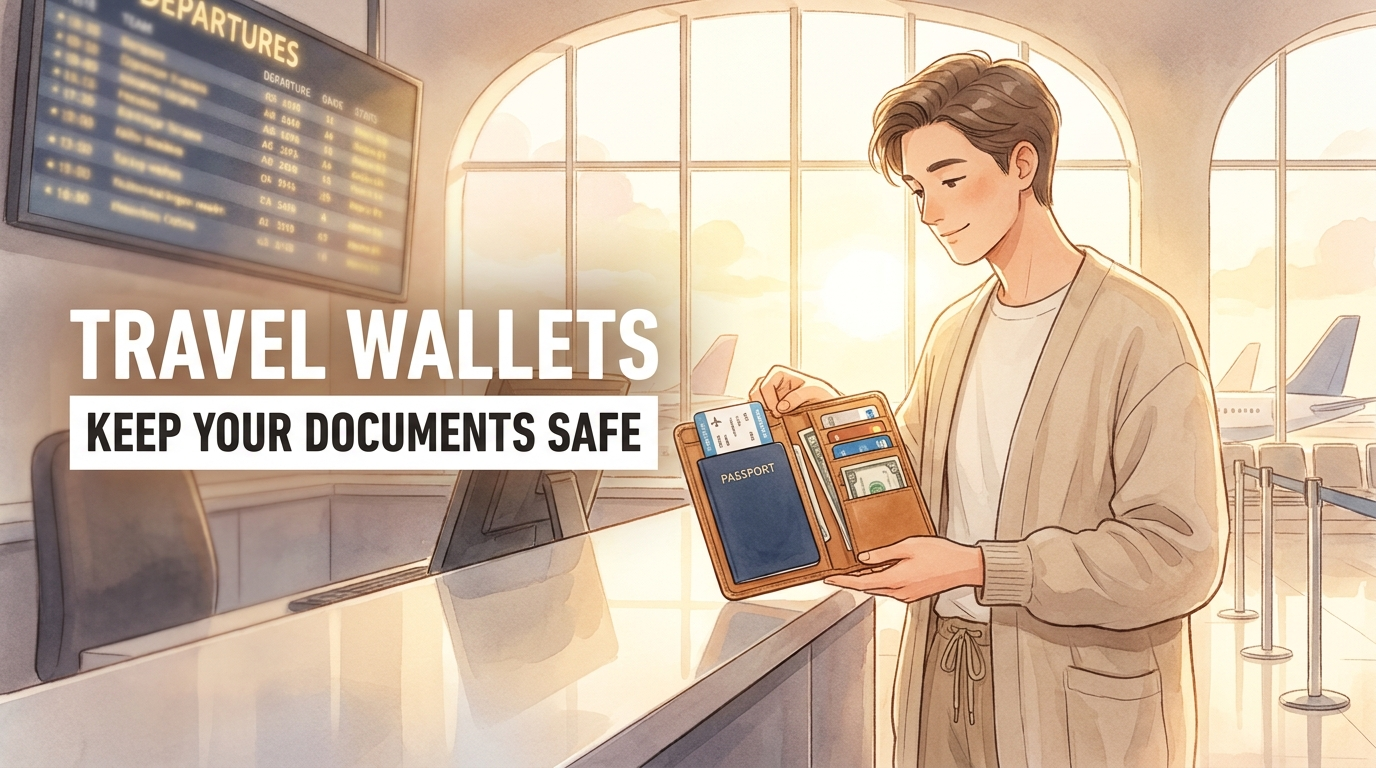
Picture the scene: you're at the check-in desk, the queue building behind you, digging through four different pockets for a passport that's in your jacket, a boarding pass crumpled in your jeans, and cards scattered across your bag. A travel wallet ends that scramble for good. It's the single, secure home for your passport, boarding pass, cards and cash — the best way to keep your most important documents safe and to hand from check-in to landing. This guide explains what makes a good one, and how to choose the right travel wallet for the way you travel.
At Simplify Living, keeping travellers organised and their documents secure is exactly what we do. So here's the straight-talking guide to travel wallets — what they do, what to look for, and which of ours fits your trip.
In short: a good travel wallet keeps your passport, boarding pass, cards and cash organised in one secure, RFID-protected place. Choose one sized to carry what you actually take, with the right format for how you travel, and document chaos becomes a thing of the past.
What Is a Travel Wallet (and How It Differs From a Regular Wallet)
A travel wallet is a larger, more organised wallet built specifically for the documents you carry abroad. Where an everyday wallet holds a few cards and some cash, a travel wallet adds dedicated space for your passport, boarding passes, multiple currencies, SIM cards and travel documents — all in one zip-secured place. Most also build in RFID-blocking protection to shield your passport and contactless cards from wireless skimming.
The point isn't just storage, it's calm. Instead of patting down your pockets at every checkpoint, you reach for one wallet and everything's there. That single habit removes most of the stress from moving through airports, borders and busy transit.
Why a Travel Wallet Is the Best Way to Keep Documents Safe
"Safe" means two things on the road — safe from loss and disorganisation, and safe from theft. A good travel wallet handles both.
Everything in one place
The most common way to lose a document is simply misplacing it in the chaos of travel. Keeping your passport, boarding pass and cards together in one wallet means there's only ever one thing to keep track of, and you always know where it is.
Protection from digital theft
Modern passports and contactless cards can be read wirelessly, and an RFID-blocking travel wallet shields them from opportunistic scanning while they're inside. It's one layer of a sensible security setup — if you want the full picture on how it works, our guide on whether you really need an RFID blocking wallet covers it.
A barrier against pickpockets
A zip-secured wallet kept close to your body is far harder to dip into than loose items in an open bag or back pocket. Worn cross-body, tucked inside a jacket, or on a neck strap, a travel wallet keeps your valuables where you can feel them.
What to Look For in a Travel Wallet
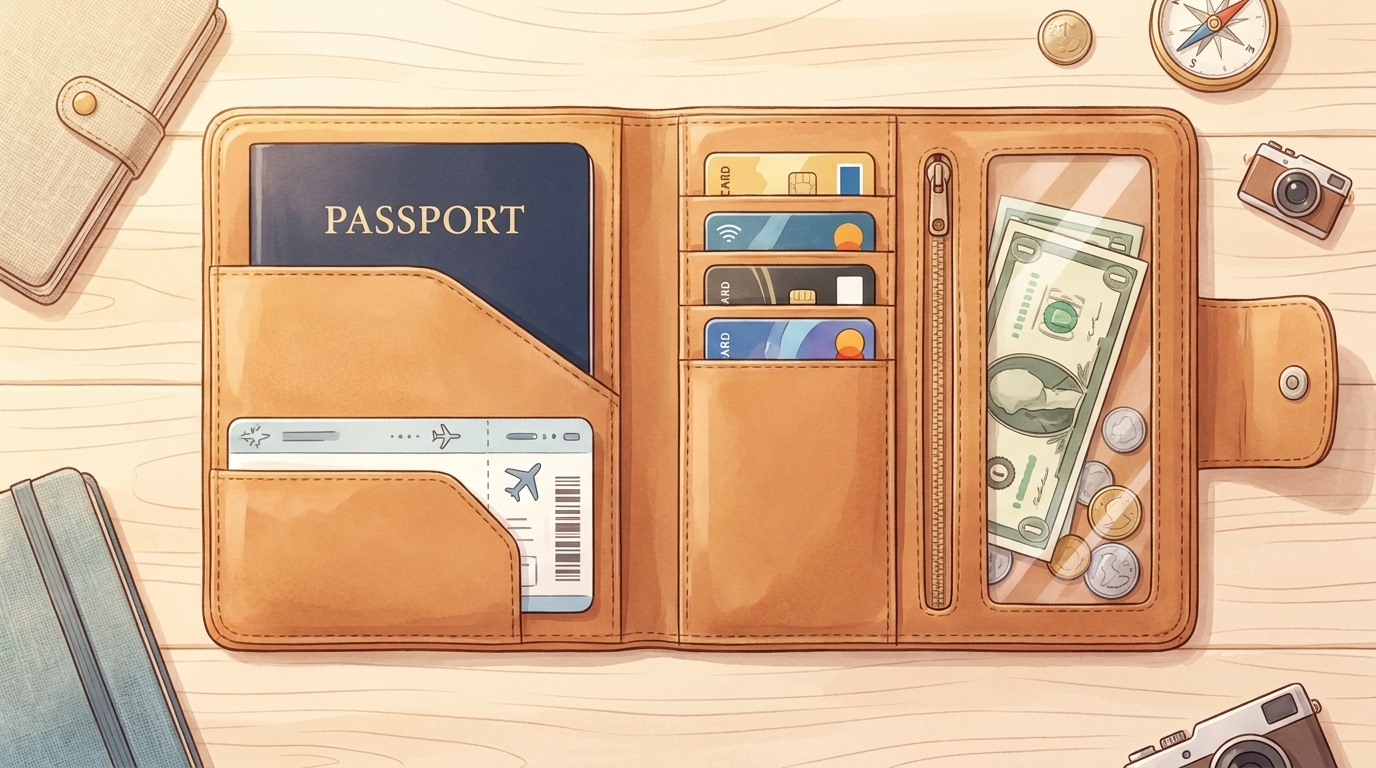
A few things separate a travel wallet you'll rely on for years from one you'll abandon after a trip.
- The right capacity. Match it to what you carry — passport and a couple of cards, or passport, boarding pass, several cards, cash, coins and a SIM. Enough slots to stay organised, without forcing you to overstuff it.
- RFID blocking. A full RFID-blocking lining shields your passport and cards from wireless skimming. For international travel, it's worth having.
- A secure closure. A solid zip-around keeps everything sealed in transit, so nothing slides out when you open your bag.
- Durable, water-resistant material. Your wallet lives in and out of bags and security trays for years — tear- and water-resistant fabric keeps it (and your documents) protected.
- The right carry style. In-hand or in-bag for quick access, on a wrist strap for hands-free security checks, or on a neck strap worn under clothing for maximum discretion.
- A slim profile. The best travel wallet is one you'll actually carry, so it should slip easily into a daypack, carry-on or handbag.
This is closely related to choosing a passport holder — if your priority is the passport specifically, our passport holder buying guide goes deeper on that side.
Our Travel Wallets, by How You Travel
Every traveller carries differently, so here's how our range maps onto real trips.
The everyday all-rounder: RFID Australian Passport Wallet

For most travellers, the RFID Australian Passport Wallet is the natural pick. Sized specifically for Australian passports, it keeps your passport, boarding pass, cards, cash and SIMs organised in one slim, water-resistant wallet with built-in RFID blocking — the easy answer for calm, secure international travel.
The organiser: RFID Travel Passport Holder

If you like everything in its place, the RFID Travel Passport Holder adds six card slots, a document sleeve, two zip pockets, a pen holder and a detachable wrist strap — a full travel document hub that goes hands-free at security and clutch-style at home.
The family carrier: RFID Family Passport Wallet

Travelling as a household, the RFID Family Passport Wallet holds 4+ passports plus cards, cash, keys and tickets, so one person can carry and organise the whole family's documents securely. (We go deeper on this in our family passport holder guide.)
The minimalist: Mini RFID Blocking Card Holder

If you travel ultra-light and mostly need your cards protected, the Mini RFID Blocking Card Holder keeps 12+ cards and cash slim and shielded — a great pairing with a simple passport cover.
Maximum security: RFID Travel Neck Wallet & Anti-Theft Pouch

For higher-risk destinations or long solo trips, the RFID Travel Neck Wallet and RFID Anti-Theft Travel Pouch sit discreetly under your clothes on a neck strap, keeping documents against your body and out of sight.
| How you travel | Best travel wallet | Why |
|---|---|---|
| Everyday all-rounder | RFID Australian Passport Wallet | Slim, fits AU passports, RFID, holds the essentials |
| Like everything organised | RFID Travel Passport Holder | Six card slots, sleeves, zip pockets, wrist strap |
| Travelling as a family | RFID Family Passport Wallet | Holds 4+ passports plus everyone's documents |
| Pack ultra-light | Mini RFID Blocking Card Holder | Slim, shields 12+ cards and cash |
| Want maximum security | RFID Neck Wallet / Anti-Theft Pouch | Worn under clothing, out of sight |
How to Keep Your Travel Wallet Safe
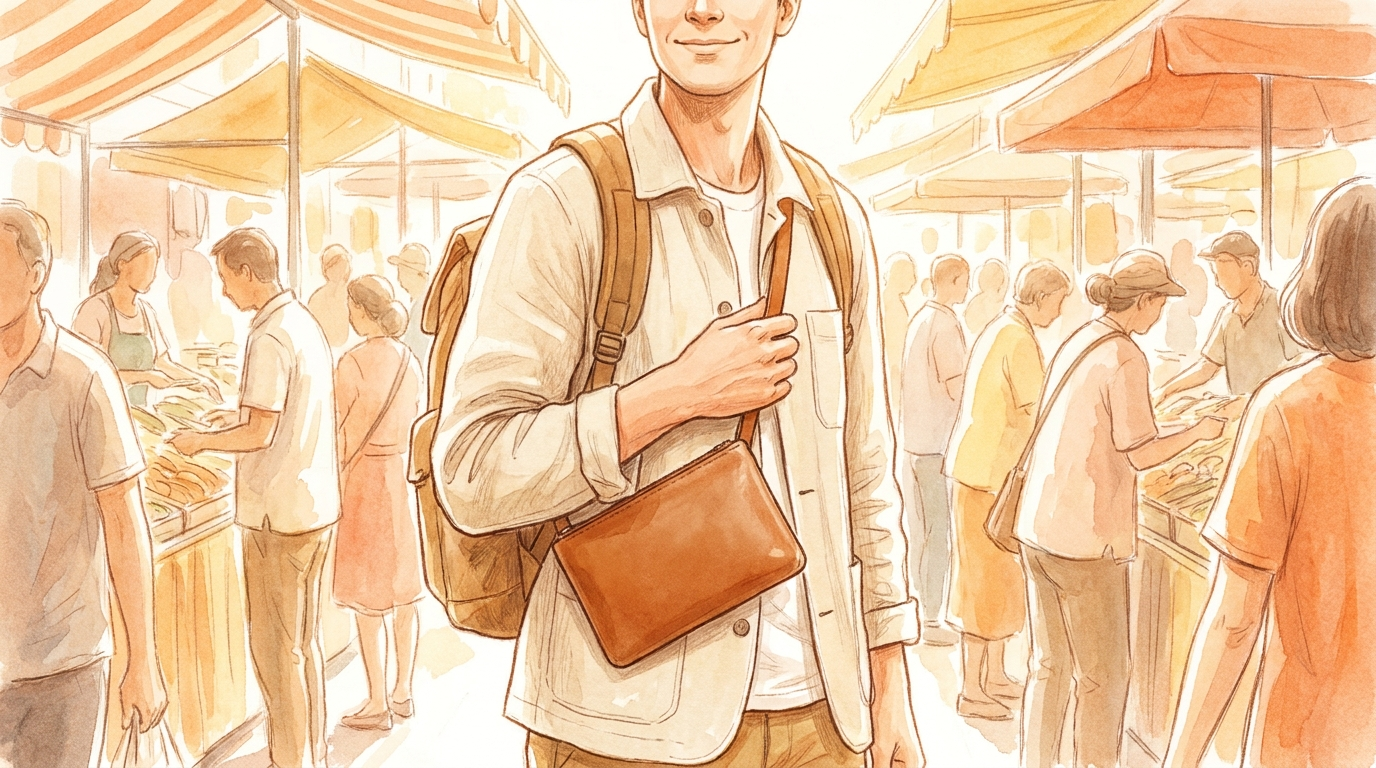
The wallet does a lot, but a few habits make it bulletproof:
- Keep it close to your body. Cross-body, inside a jacket, or on a neck strap — never in a back pocket or the outer pocket of an open bag.
- Don't flash it. Avoid pulling out your full wallet in crowded public places; take what you need discreetly.
- Use the zip. A sealed wallet can't spill its contents when you open your bag, and it's harder for anyone else to open.
- Keep digital backups. Photograph your passport and key documents and store them on your phone, separate from the originals.
Frequently Asked Questions
What is the difference between a travel wallet and a regular wallet?
A travel wallet is larger and more organised, with dedicated space for your passport, boarding passes, multiple currencies and cards, usually with RFID-blocking protection and a secure zip. A regular wallet is smaller, designed for everyday cards and cash, and won't hold travel documents. The travel wallet keeps everything you need abroad in one secure place.
Are travel wallets worth it?
For anyone travelling internationally, yes. A travel wallet keeps your documents organised and secure, saves you fumbling at every checkpoint, and protects your cards and passport from wireless skimming — all for a small cost and real peace of mind. It's one of the most useful things you can carry.
Do travel wallets have RFID protection?
The good ones do. RFID-blocking material shields your passport and contactless cards from wireless scanning while they're inside the wallet. All of our travel wallets build RFID blocking in as standard, so your information stays protected as you travel.
What size travel wallet do I need?
Match it to what you carry. If it's just a passport and a couple of cards, a slim wallet or card holder is plenty. If you carry boarding passes, several cards, cash, coins and a SIM — or documents for a whole family — choose a larger organiser with dedicated slots and zip pockets.
Where should I keep my travel wallet while travelling?
Keep it close to your body and out of sight — cross-body, inside a jacket, or on a neck strap under your clothes in higher-risk areas. Avoid back pockets and the outer pockets of open bags, and don't display it in crowded public places.
Travel Organised, Travel Secure
A travel wallet is the simplest way to take the stress and risk out of carrying your documents — everything in one secure, organised place, protected from skimming and easy to reach when you need it. Match the size and format to how you travel, look for full RFID blocking and a solid zip, and you're set. Browse our full range of travel wallets — every one is backed by free shipping and our 30-day money-back guarantee.

Leave a comment
This site is protected by hCaptcha and the hCaptcha Privacy Policy and Terms of Service apply.